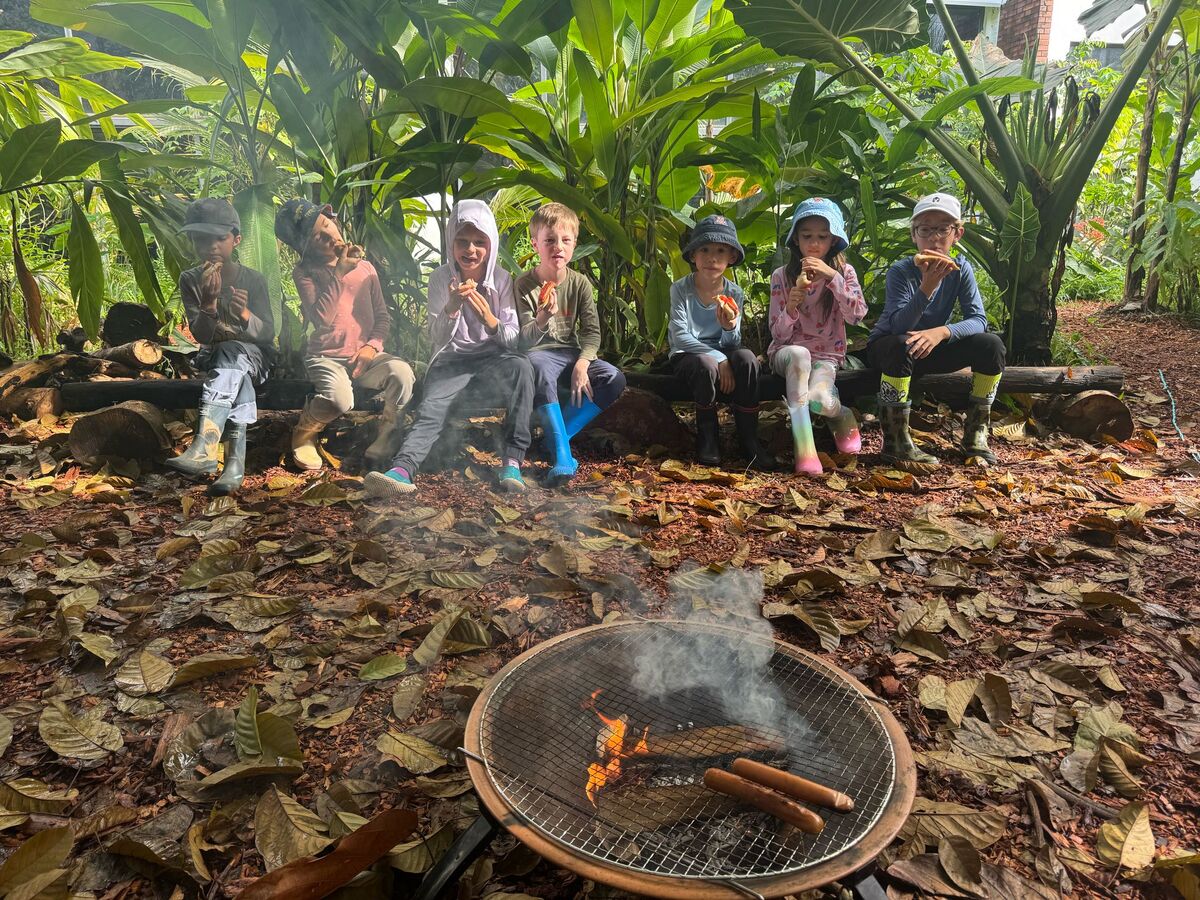
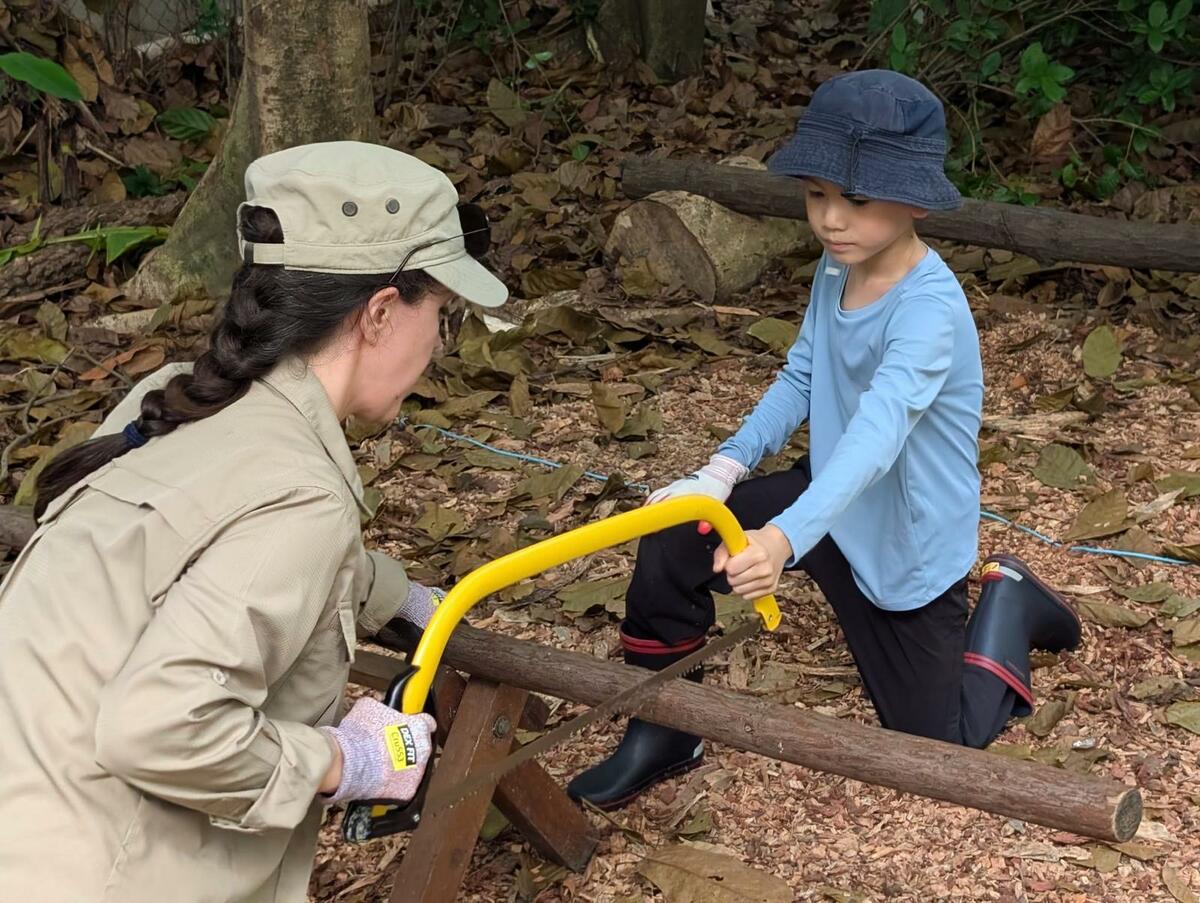
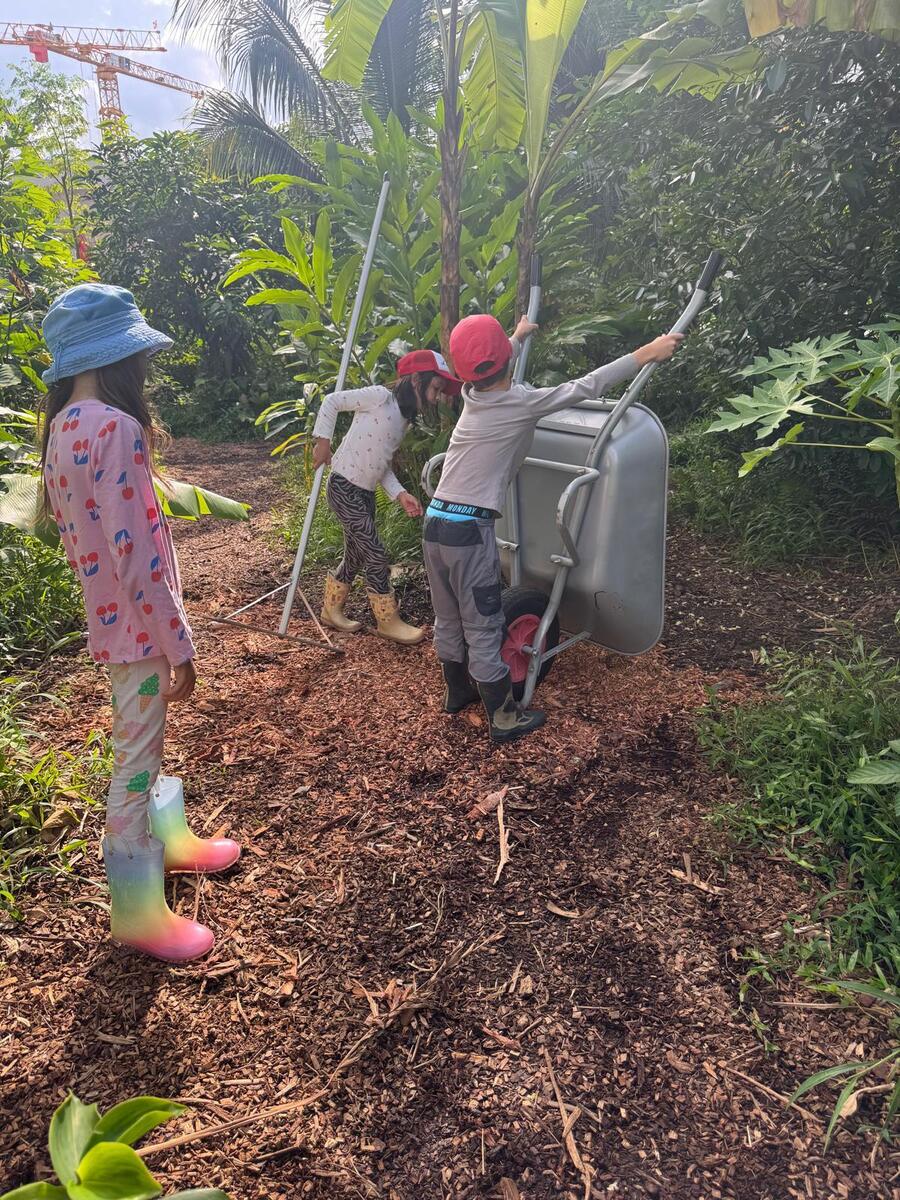
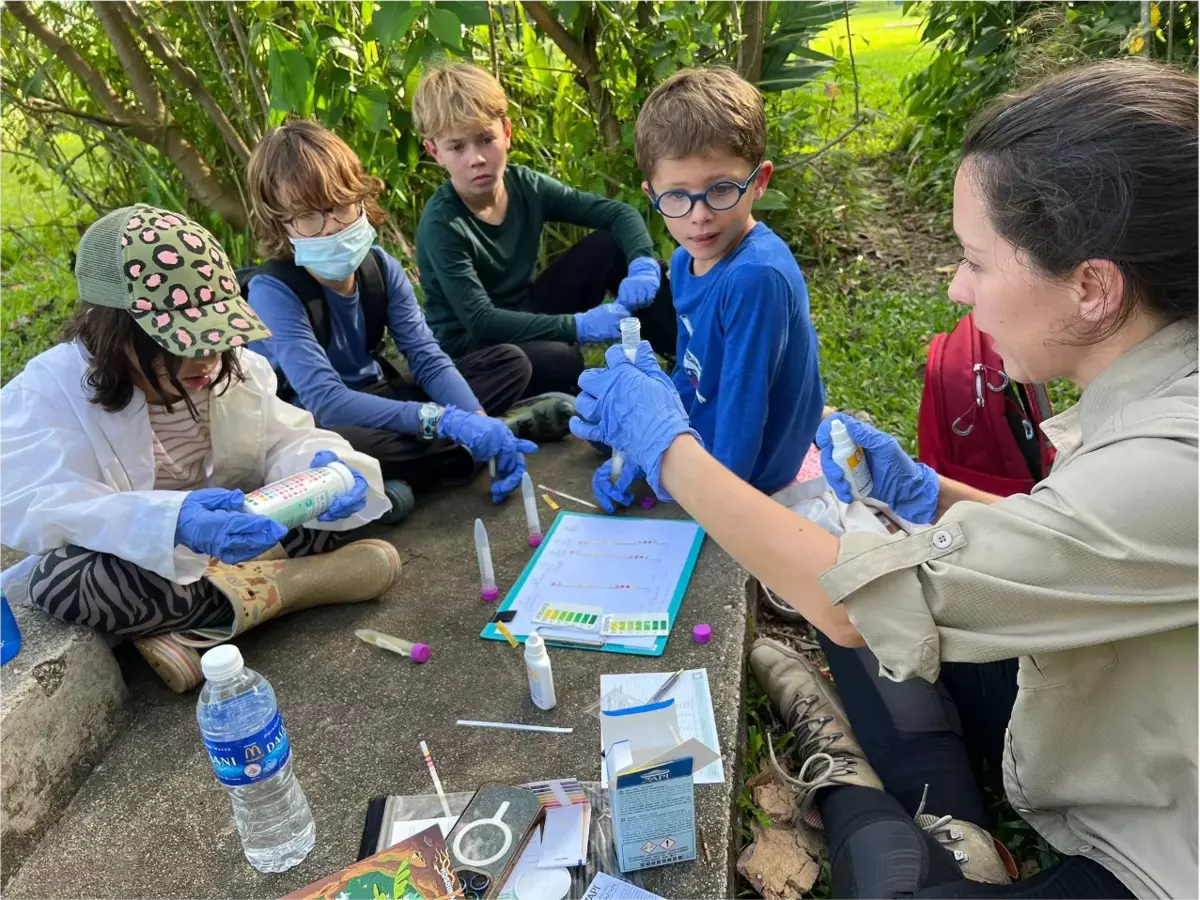
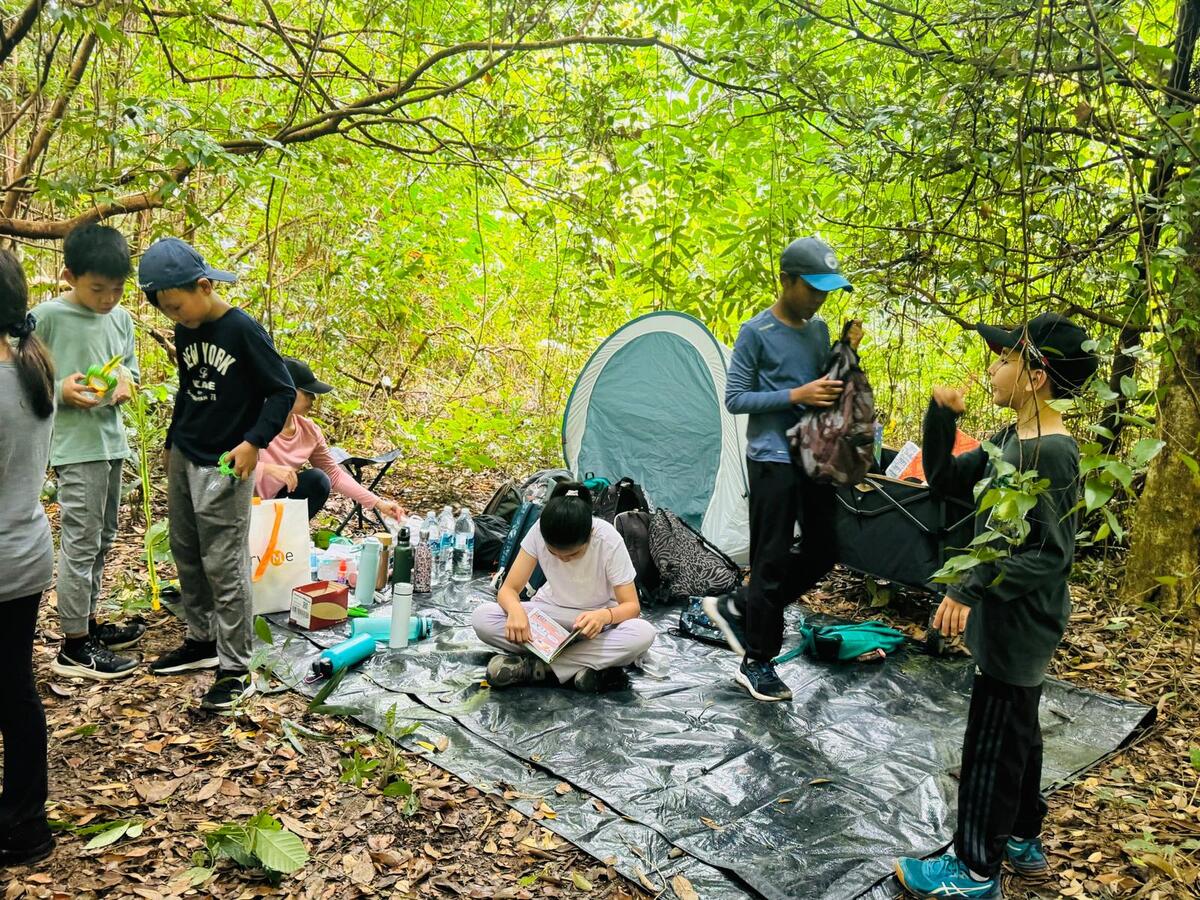
We choose kit based on our experience outside in the tropics. It doesn't need to be fancy, just chosen with an understanding of the environment your child will encounter in a forest school. Outdoor classrooms in the tropics always have a degree of discomfort due to the heat and insects, but lots can be done to minimise unnecessary issues.
Clothing Factors
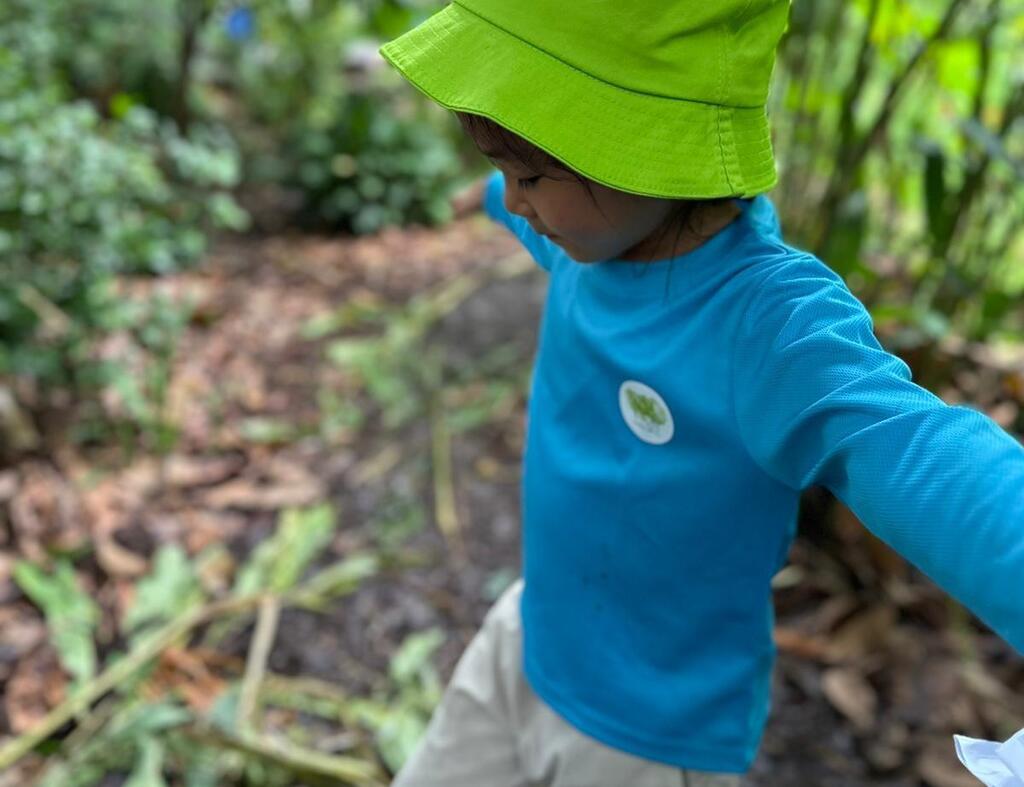
Long sleeves and legs protect your child from the sun
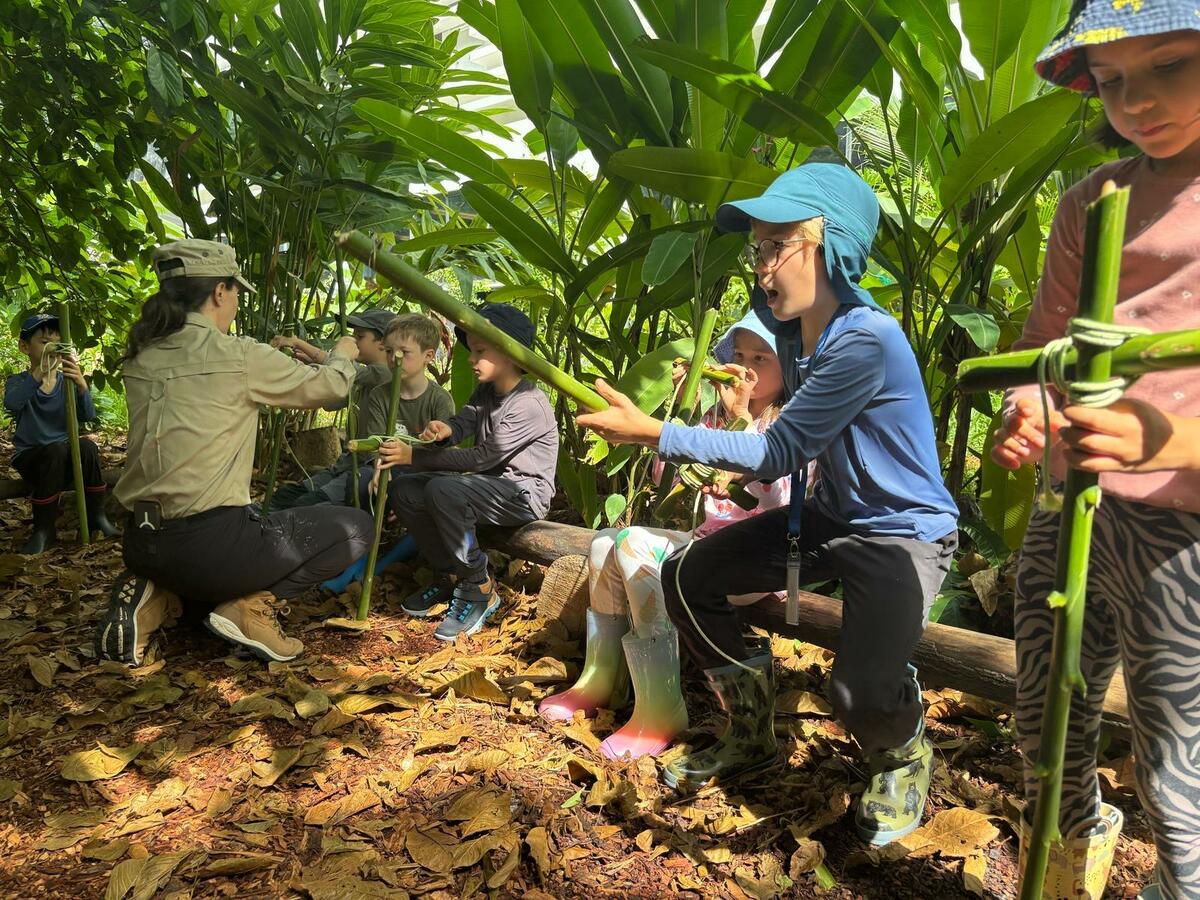
A bright and contrasting top helps the Forest School Leader see your child and keep them safe
Light-coloured clothes are less likely to attract mosquitoes
Loose clothes make it harder for mosquitoes to bite your child
A hat with a full brim all the way round protects your child's ears and back of the neck from the sun
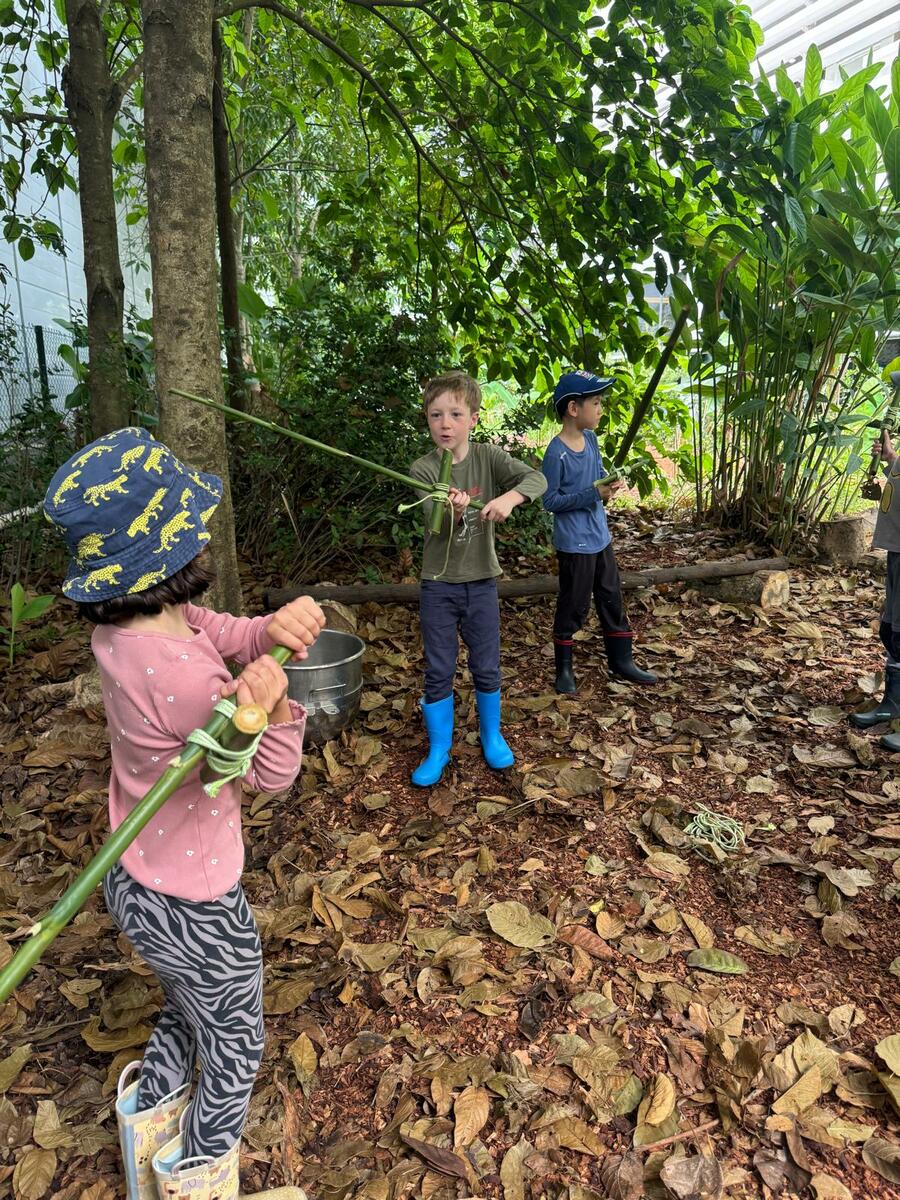
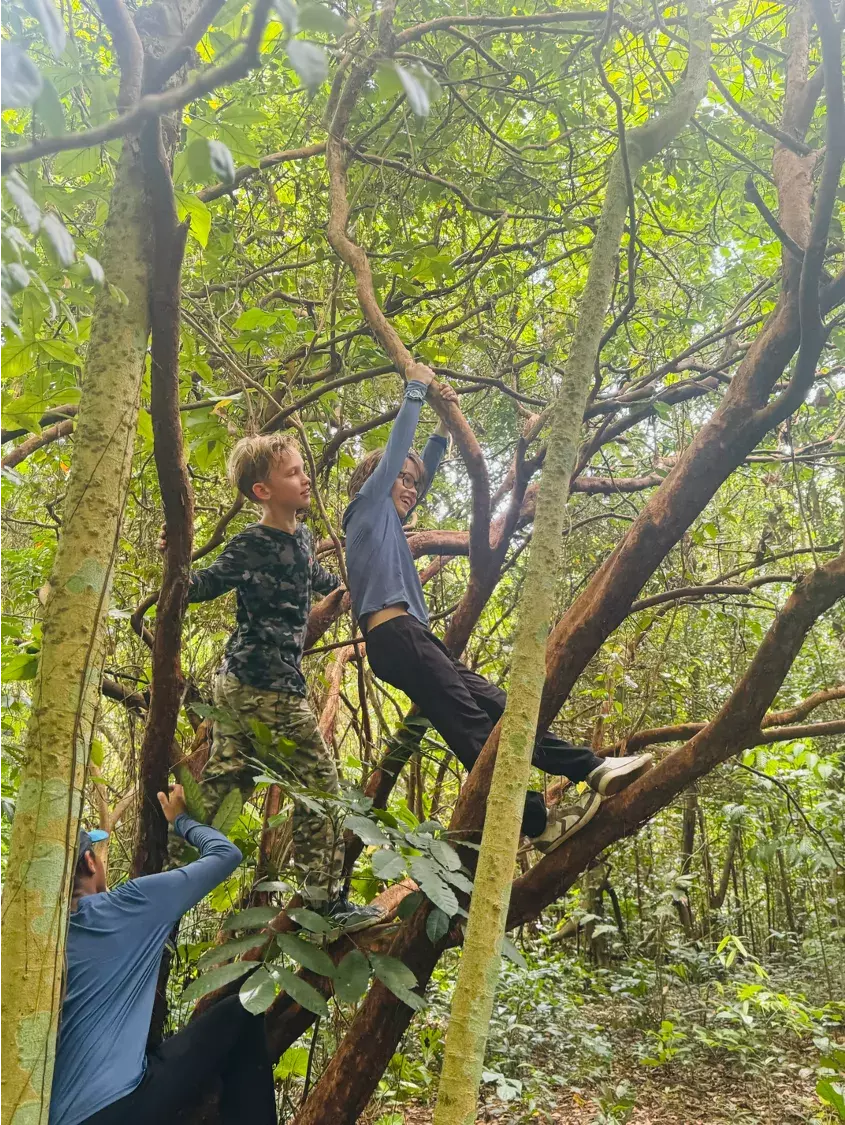
Hiking boots protect your child's feet, but also allow for mobility when active (e.g. climbing trees)
Waterproofs will open up play in the rain for your child if they want to stay dry
Insect-repellent and Sunscreen Factors
Clothes imbued with permethrin insecticide will kill on contact any mosquitoes that try to bite through the clothes. Once dry, permethrin is tightly bonded to the fabric fibres and is poorly absorbed through skin, it's approved for use with children by the US EPA.
Heavy duty insect repellent with scientifically-backed active compounds, such as Deet, Picaridin, IR3535, or p-Menthane-3,8-diol (PMD)
Barrier oils for the face and hands such as Avon's Skin So Soft Dry Oil that prevents biting on delicate skin through a physical barrier and gentle active ingredients, such as citronellol, limonene, and linalool
PMD is the active ingredient in citronella and lemongrass, but it is not in all species and it needs to be concentrated through chemical processes to be effective
SPF 50 mineral sunscreen that is sweat resistant and designed for sensitive skin on the face is a must